Octon
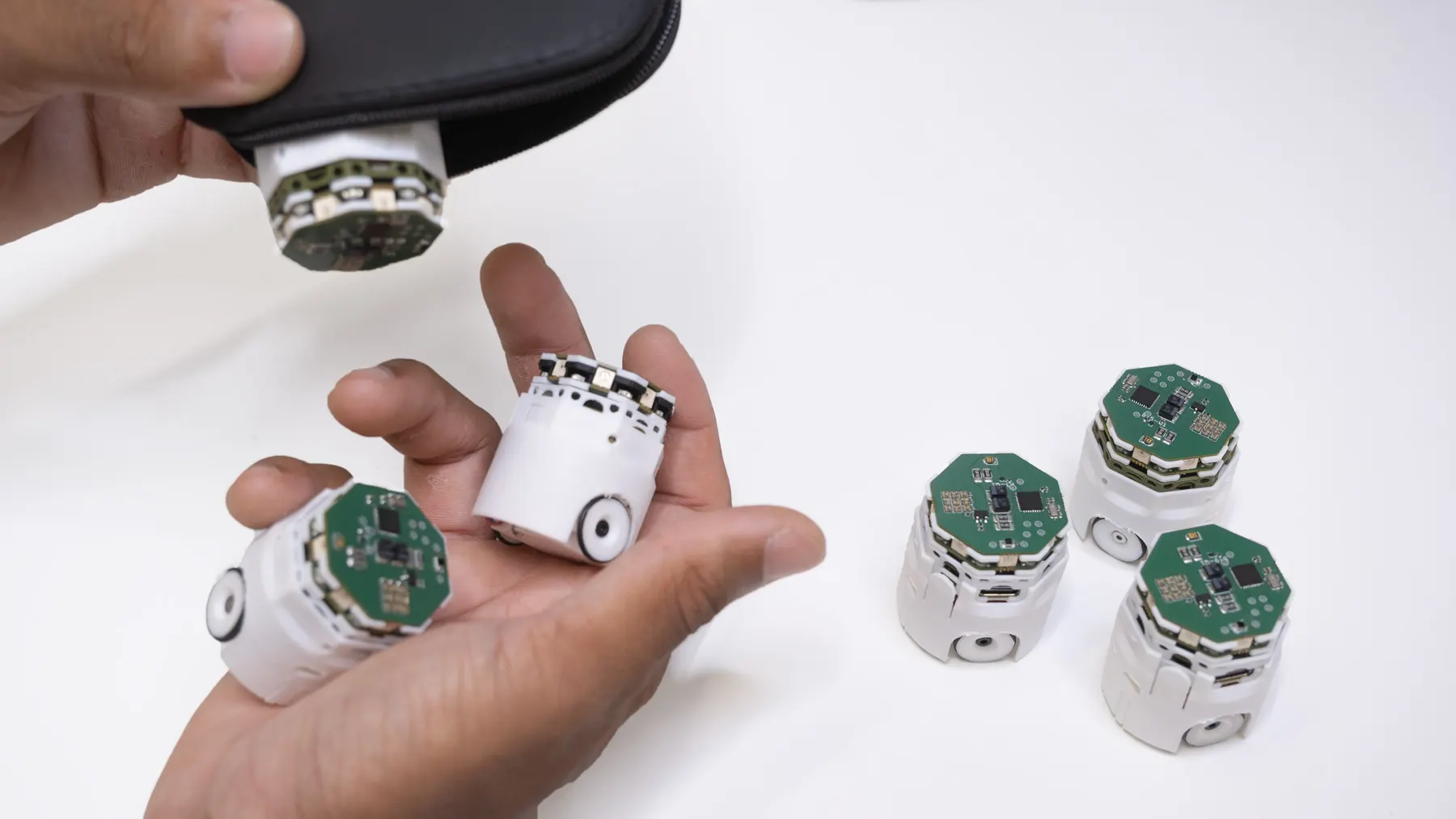
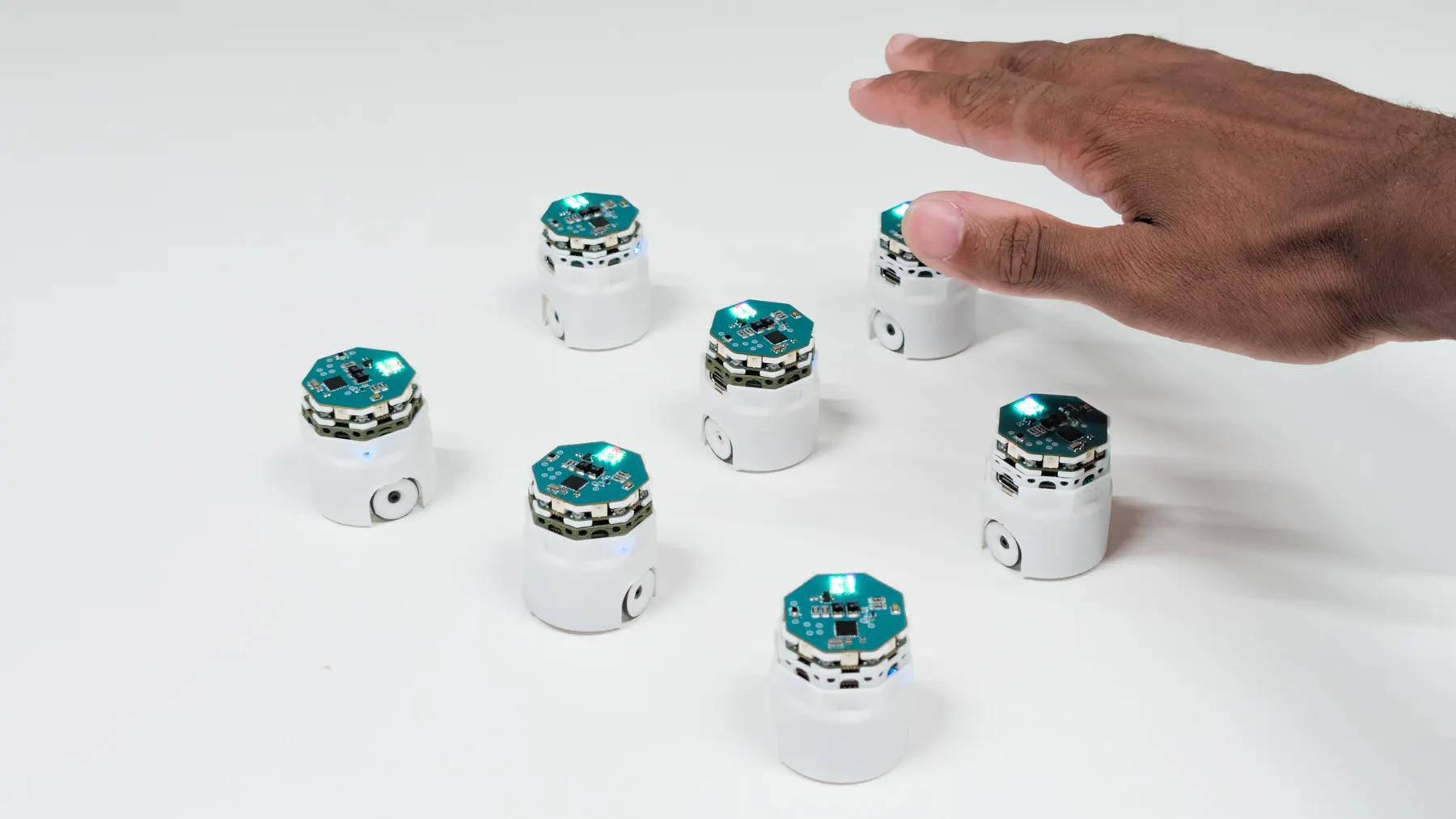
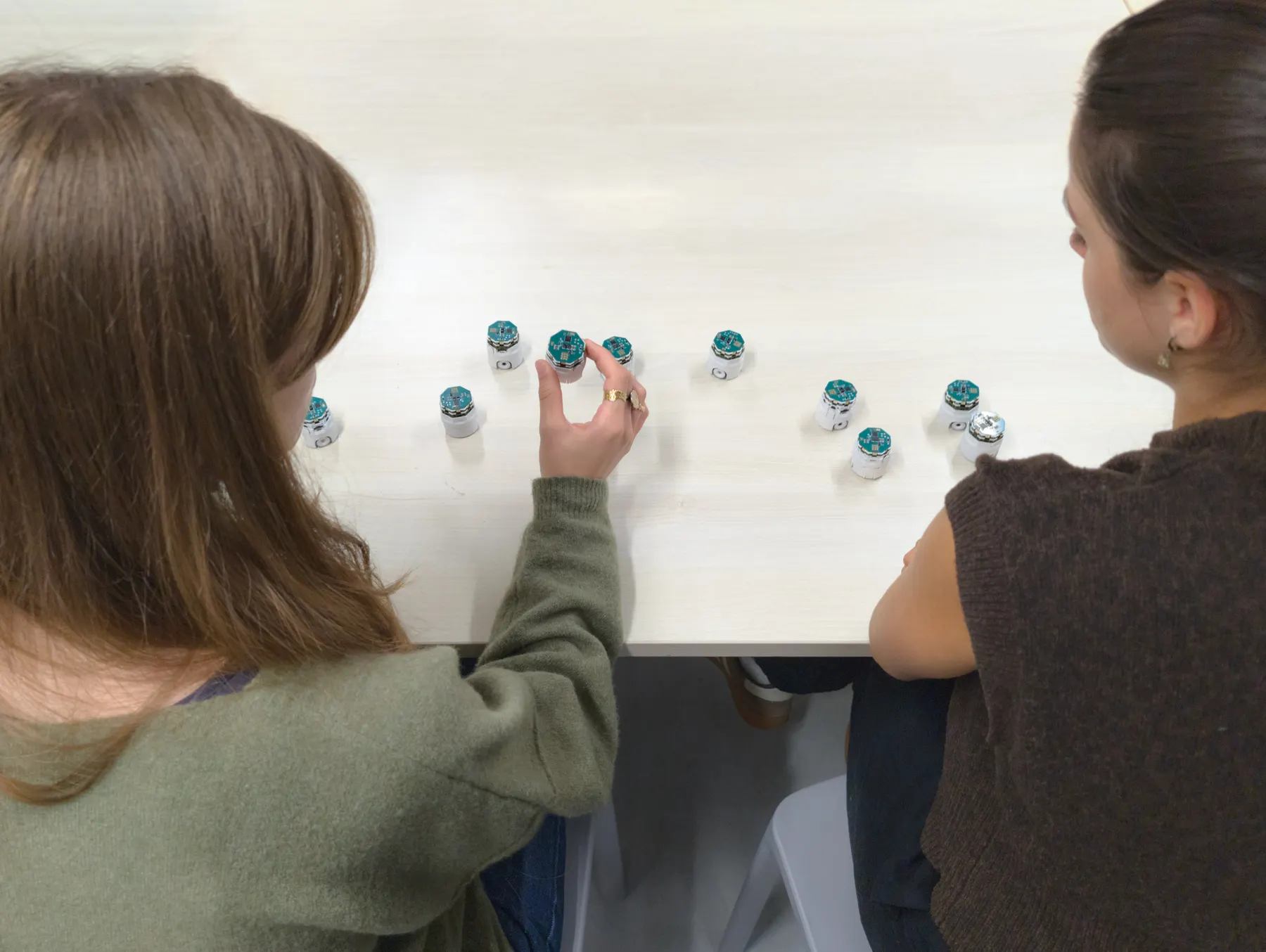
A swarm of palm-sized robots you take out of a bag, put on any table and use within seconds. No camera, no projector, no tracking server: every sensor is on the robots.
Move your cursor over the table and the swarm follows it.
01 · Video
Octon in one minute
Setting up the swarm, then guiding it by touch, mid-air gestures and voice. The video has sound and subtitles.
02 · Why
Swarm interfaces leave the lab
A swarm user interface is made of many small robots that move together to show information and respond to people. Most of them only work inside an instrumented room: an overhead camera or a projector tells every robot where it is, and a central computer decides where each one goes.
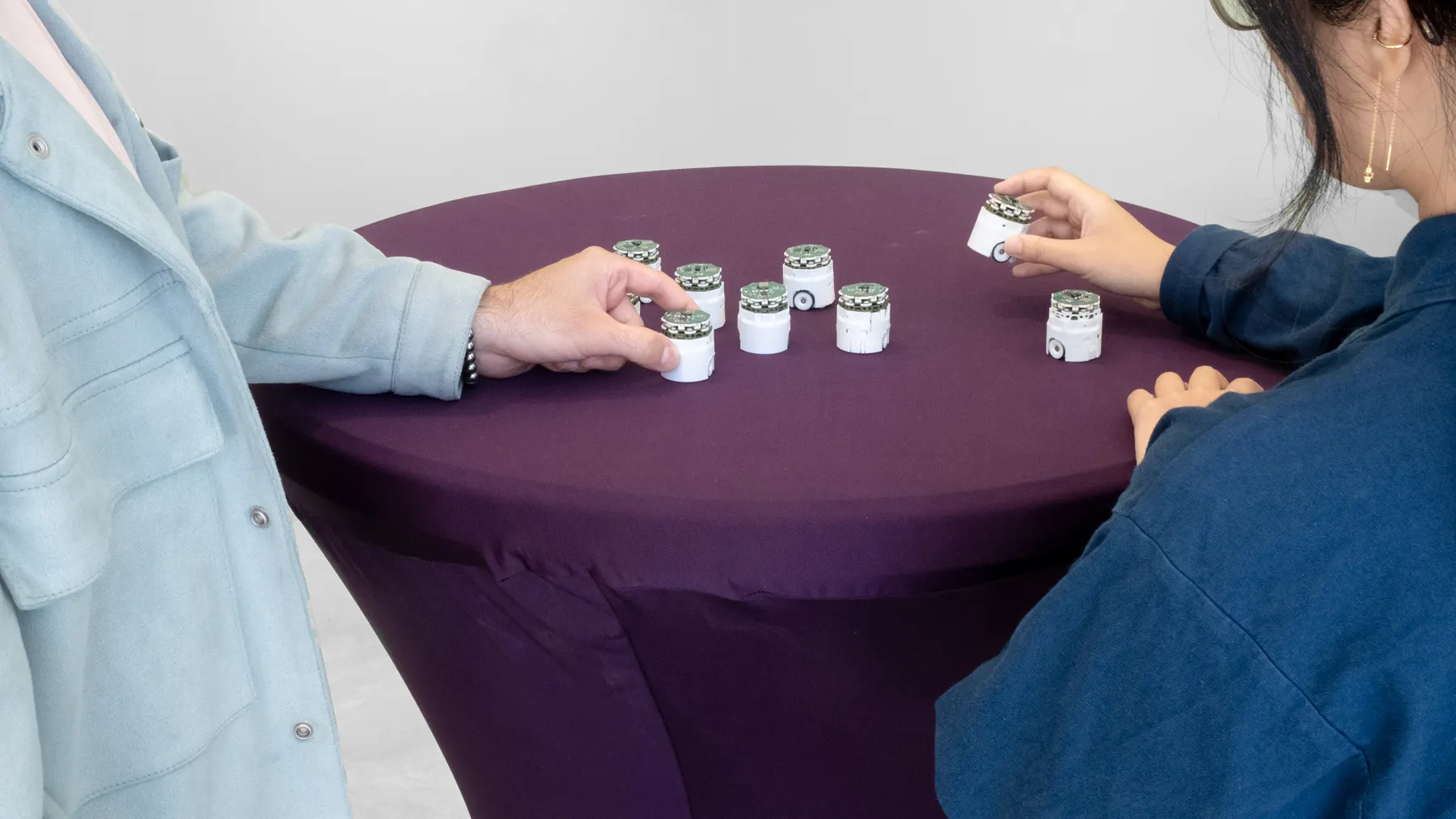
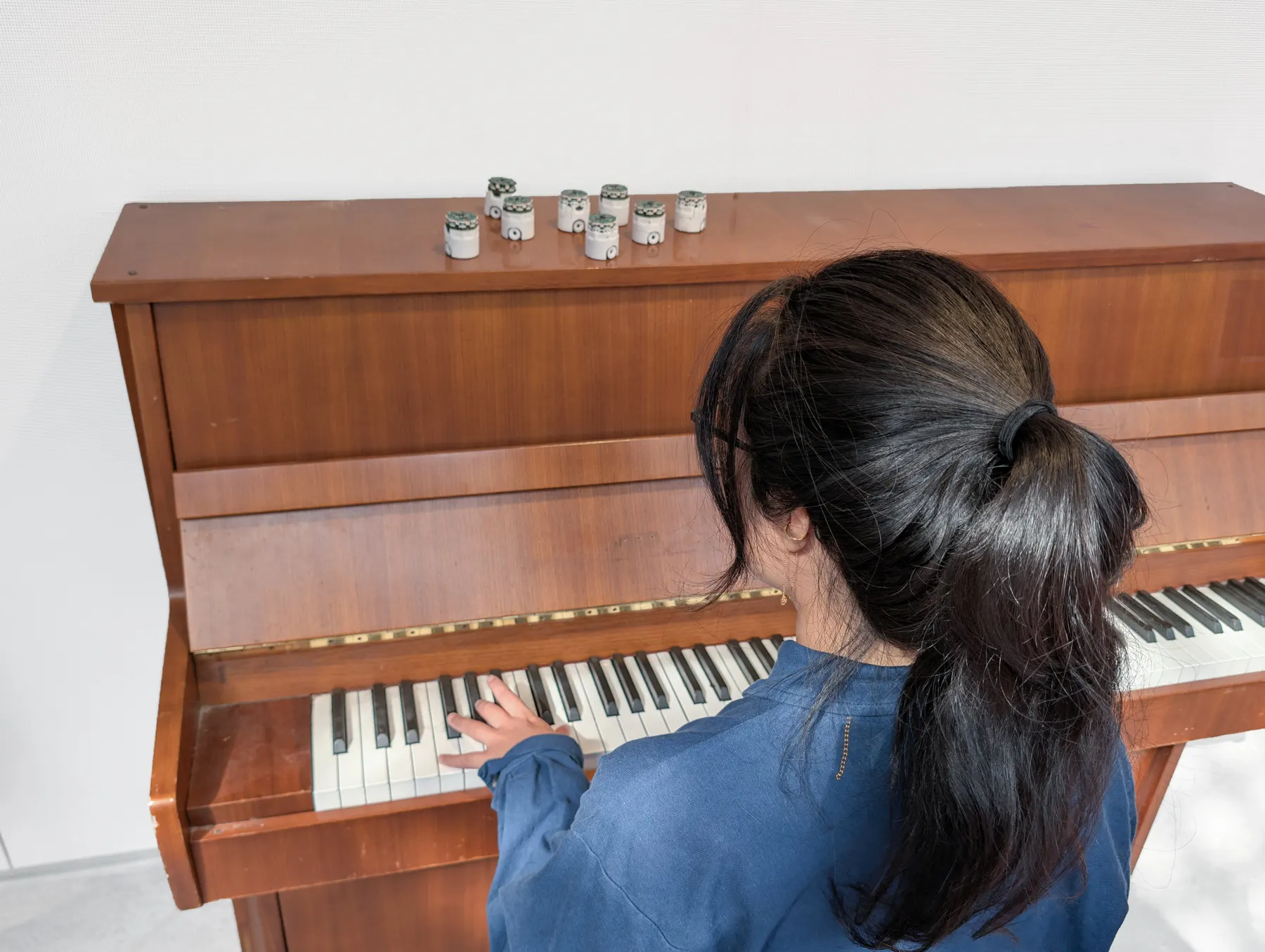
Octon removes that room. The robots find each other, agree on a shared frame of reference and sense their users on their own. You can carry them in a pouch, put them on a kitchen table, a piano or a museum plinth, and start.
- Robots built
- 24
- Width
- 35 mm
- External infrastructure
- none
03 · Robot
One robot, opened up
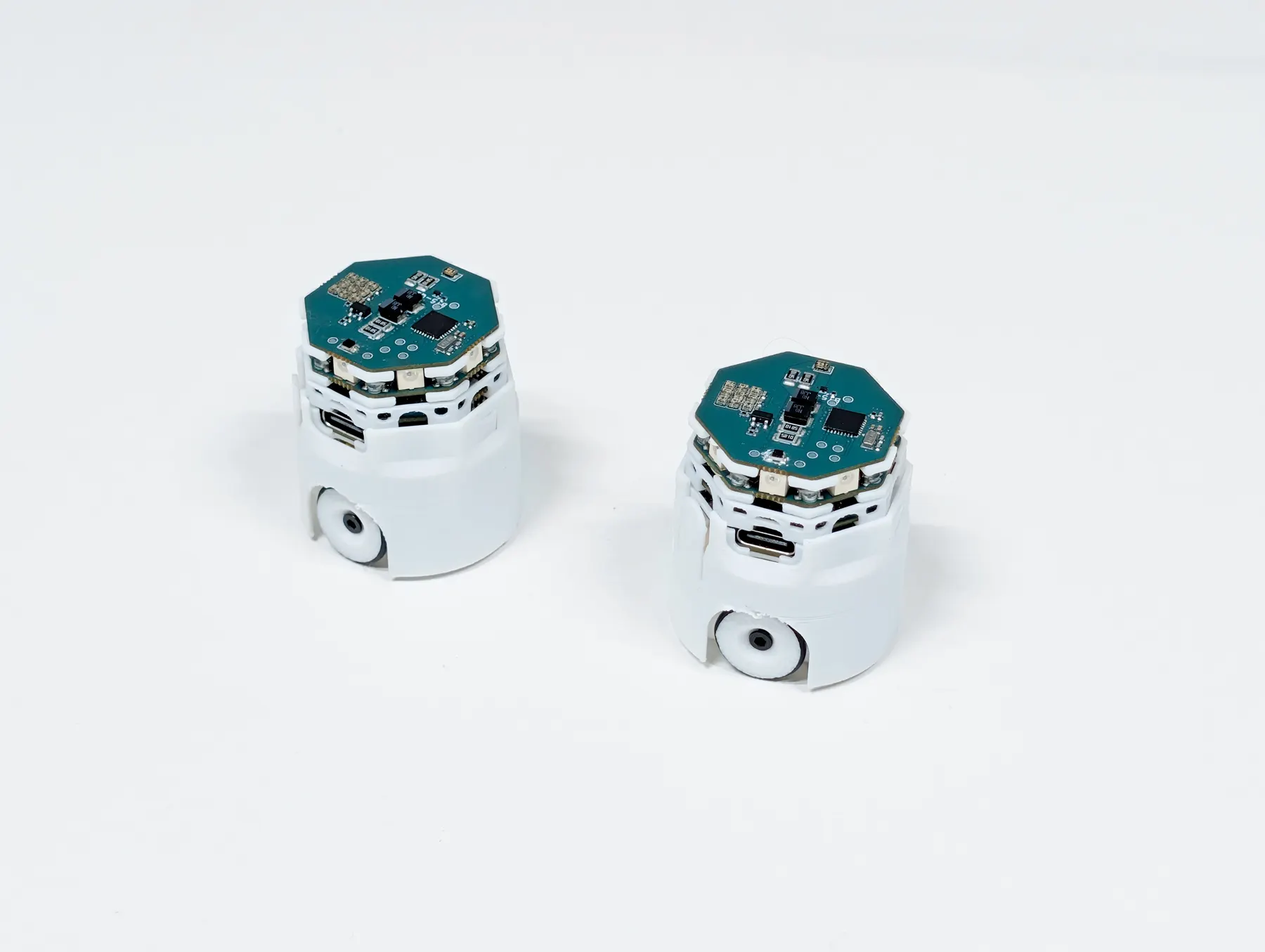
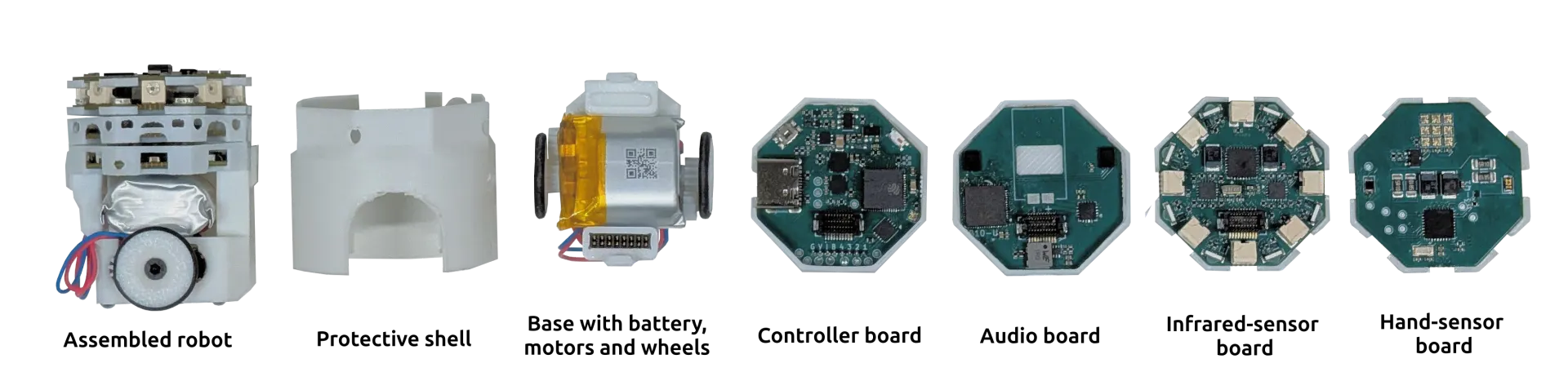
Each robot is a stack of custom circuit boards inside a 35 mm printed shell, on two wheels. Sensors around the stack let a robot perceive its neighbours. Others let it feel taps and twists, notice a hand passing above and hear spoken commands.
04 · Research
What we study
Octon is the platform of a PhD on interaction with decentralised swarms. The work runs along four questions.
-
RQ1
Design space
What do existing swarm interfaces have in common, and what is missing? A review of interactive swarm systems maps their applications, devices, interactions and how centralised they are.
-
RQ2
A swarm without infrastructure
Can robots localise each other and coordinate using only what they carry? Each robot senses its neighbours, estimates where they are and decides how to move.
-
RQ3
Interaction sensed by the swarm
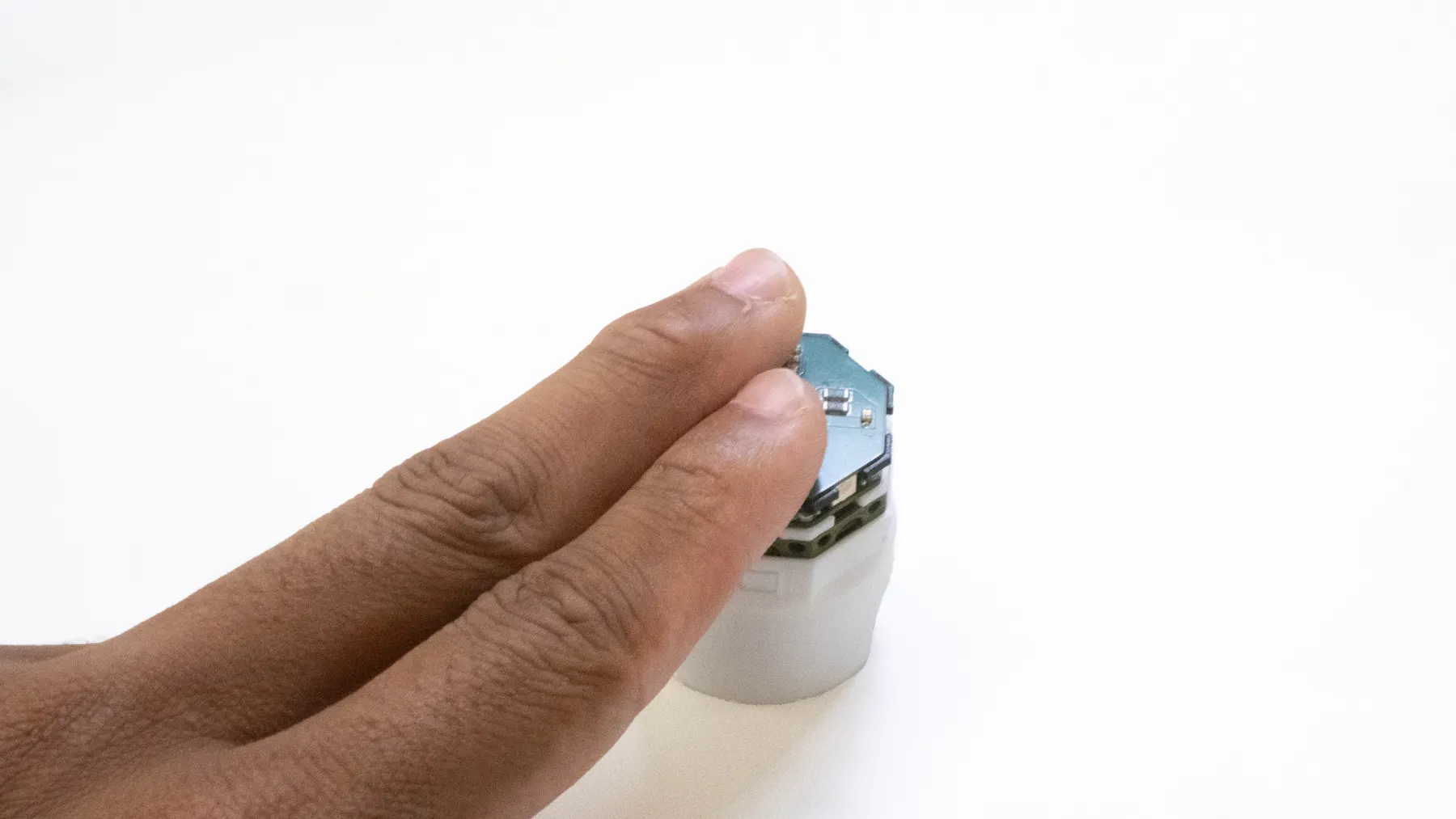
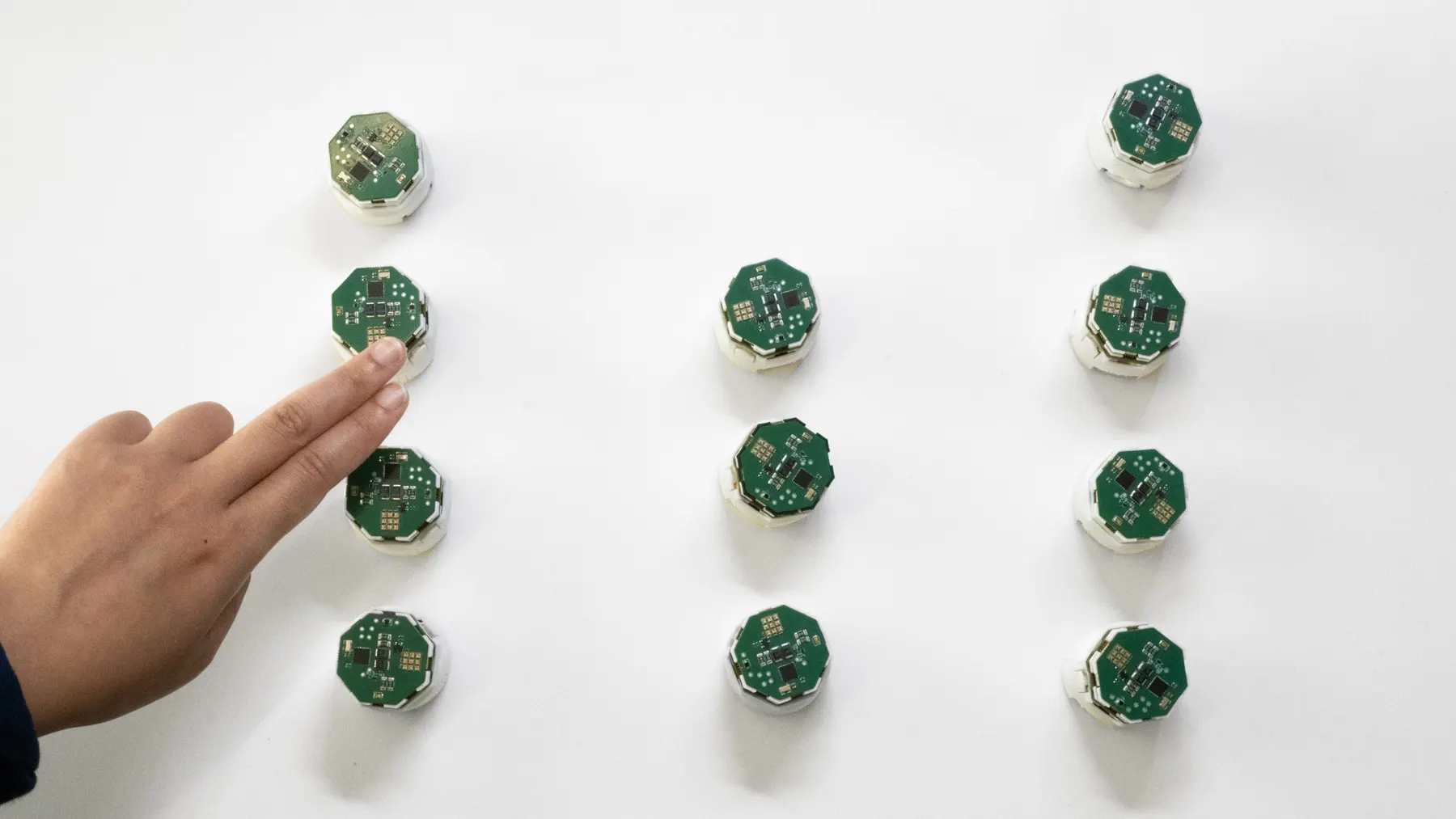
How can a swarm recognise touch, mid-air gestures and speech with sensors spread across many small robots, and how does the number of robots change what it can sense?
-
RQ4
On-the-fly applications
What becomes possible when a swarm interface fits in a pocket and works anywhere: in a museum, around a piano, in a classroom, on a meeting table?
05 · Scenarios
Wherever there is a table
06 · Gallery
Pictures
07 · Team
People
PhD student · lead
Thomas Juldo
De Vinci Research Center · ISIR, Sorbonne Université, CNRS
Co-author · supervisor
Gilles Bailly
ISIR, Sorbonne Université, CNRS
Co-author · supervisor
Nicolas Bredeche
ISIR, Sorbonne Université, CNRS · Laboratoire Jean Perrin
Co-author · supervisor
Marc Teyssier
De Vinci Research Center
Contributors
- Louis Galliard infrared localisation test bench and the earlier CAD of the robots
De Vinci Higher Education · Institut des Systèmes Intelligents et de Robotique (ISIR) · Sorbonne Université · CNRS
08 · Contact
Talk to us
For collaborations, demos, press or questions about the robots.